
From Space to Experience, Part I: Why Neighborhood Greens Matter (and Why They Often Fail)

Updated: Feb 24
Too often, neighborhoods are shaped by what remains: leftover parcels, aging buildings, and sprawling parking lots. This approach overlooks what’s possible. When we reimagine these spaces through a lens of experience and connection, something deeper happens. People begin to feel differently about where they live, work, and gather. Thoughtfully designed green spaces invite us to slow down, explore, and belong. They restore identity, spark curiosity, and create moments that feel meaningful.
This is where the neighborhood-scale catalyst thrives. Not in grand gestures, but in the everyday places that shape how we move and feel. These green spaces do more than function; they create Experience Culture, where design enriches how we interact with the world around us. They become the heartbeats of walkable districts, strengthening both community and commerce.

Why Neighborhood-Scale Green Spaces Matter
Green space isn’t simply an amenity; it’s a feeling. It represents a shift in how we experience place. When neighborhoods weave nature into their fabric, we move differently, spend differently, and connect differently. These projects create value not because they add features, but because they create moments: moments of comfort, discovery, community, and belonging.
They help us feel:
Healthier: Being near nature reduces stress and encourages movement.
More connected: Shared spaces spark spontaneous encounters.
Proud: Our neighborhood feels intentional and cared for.
Inspired: The environment tells a story unique to our community.
For clients, these projects create a sense of confidence and momentum. They provide tools to balance economic goals with social and ecological impact, proving that design-led development enhances both return on investment and lived experience.
Challenges Cities and Districts Face
Even as the demand for walkable, green-centered neighborhoods grows, many communities remain shaped by outdated development models. Cities and towns often face a complex mix of physical, financial, and cultural barriers. These challenges make it difficult to integrate meaningful public spaces into everyday environments. They aren’t just logistical; they’re systemic, influencing how we live, move, and connect.
Communities and developers share similar obstacles. Whether it’s an aging shopping center, an underperforming office campus, or a vacant municipal parcel, the challenge is the same: how do we turn constraints into opportunity?
Land Frozen by Legacy Decisions
Sites dominated by aging parking, rigid zoning, or large-format buildings that no longer serve today’s needs.
Lack of Human-Scale Experience
Even renovated environments can feel sterile without shade, edges, or activation.
Fragmented Land Use
Zoning that separates retail, residential, and recreation prevents natural synergy between daily life and shared open space.
Limited Resources
Municipalities face funding gaps, while private developers face pressure to maximize leasable area.
Shifting Market & Demographic Demands
Younger generations, remote workers, and aging residents all seek connected, experience-rich communities. Yet many local frameworks haven’t evolved to meet these expectations.
Car-Centric Development
Decades of planning around automobile access have left limited room for pedestrian comfort, shade, and public gathering.
These challenges may be systemic, but so is the opportunity. When cities, developers, and design teams approach underutilized sites with a new lens—one rooted in walkability, human experience, and shared public space—constraints become catalysts. The places that thrive in today’s market won’t be defined by what’s easiest to build, but by what’s most meaningful to live in.
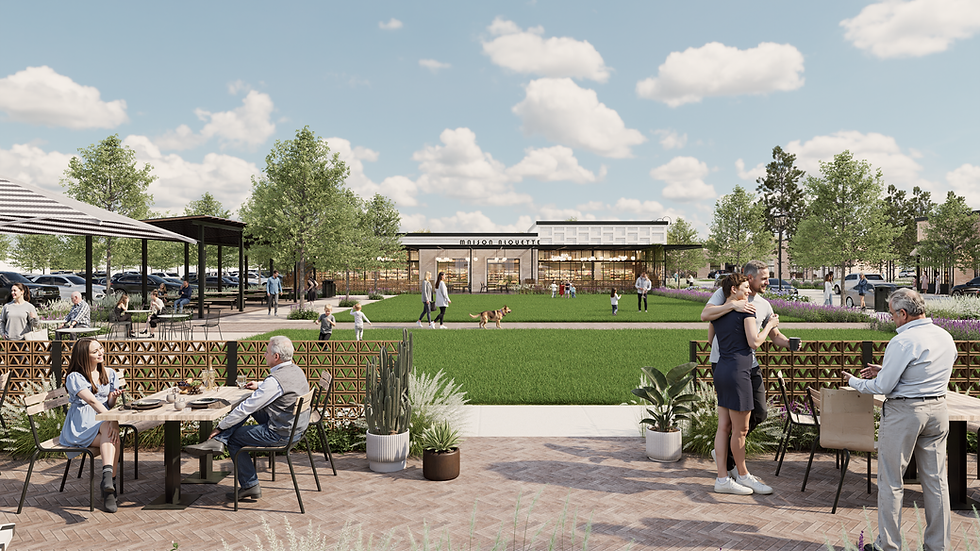
Why We Should Integrate Green-Centered Projects
Green space isn’t simply an amenity; it’s a feeling. It represents a shift in how we experience place. When neighborhoods weave nature into their fabric, we move differently, spend differently, and connect differently. These projects create value not because they add features, but because they create moments: moments of comfort, discovery, community, and belonging.
They help us feel:
Healthier: Being near nature reduces stress and encourages movement.
More connected: Shared spaces spark spontaneous encounters.
Proud: Our neighborhood feels intentional and cared for.
Inspired: The environment tells a story unique to our community.
For clients, these projects create a sense of confidence and momentum. They provide tools to balance economic goals with social and ecological impact, proving that design-led development enhances both return on investment and lived experience.
Drives Economic Resilience
Walkable districts with activated green spaces see stronger retail performance, higher occupancy, and long-term property value gains.
Improves Health & Wellbeing
Access to nature promotes physical activity, reduces stress, and fosters social connection across generations.
Enhances Environmental Performance
Green infrastructure cools urban heat, manages stormwater, and strengthens ecological systems.
Builds Community Identity
Shared spaces give neighborhoods a sense of pride and belonging, reinforcing the local brand and culture.
Aligns with Market Demand
As residents and businesses seek authentic, experience-driven places, green-centered design becomes a differentiator in both urban and suburban markets.
Green spaces succeed when they do what great places have always done: invite us in, encourage connection, and create experiences worth returning to. They strengthen the health of communities, the resilience of ecosystems, and the long-term value of development. In today’s market, these projects stand out not because they offer more features, but because they offer something rarer: a place that feels meaningful.
![Greenside - Houston, Texas [Spring Branch]](https://static.wixstatic.com/media/021690_1f9d3127c8344feabbef4bd99a6c0d66~mv2.jpg/v1/fill/w_980,h_551,al_c,q_85,usm_0.66_1.00_0.01,enc_avif,quality_auto/021690_1f9d3127c8344feabbef4bd99a6c0d66~mv2.jpg)
When Green Spaces Miss the Mark... And How to Avoid It
Not all green spaces succeed. Many fall short because they treat landscape as decoration rather than infrastructure for Experience Culture. Common pitfalls include:
Lack of Shade
Spaces may look inviting but feel impossible to occupy, especially in summer months.
Poor Adjacencies
Green spaces located next to blank walls or low-activity uses lose energy.
Oversized or Undersized
Scale can undermine comfort; too big feels empty, while too small feels token.
Inflexible Design
Spaces that cannot adapt to events, seasons, or evolving community needs.
No Programming
Without activation, even beautiful spaces fail to become destinations.
At CultivateLAND, we see landscape as infrastructure for experience, not ornament. Great green spaces work because they are intentional—physically, emotionally, and culturally.
Designing for Experience, Not Just Amenity
Green spaces succeed when they offer more than a view; they offer an experience. When designed with shade, context, flexibility, and activation, they become places we return to, not just pass through. In today’s market, the most valuable districts aren’t defined solely by what they contain, but by how they make us feel: welcome, connected, inspired. The opportunity ahead isn’t simply to add more green space; it’s to create spaces that cultivate culture, belonging, and lasting momentum.
What Success Looks Like... and How to Design for It
So what does it look like when green spaces are done well, and why do the best ones feel effortless? In Part II, we explore the design intent behind successful placemaking catalysts and the strategies teams use to turn constraints into opportunity. From adaptive reuse to new mixed-use districts, we’ll unpack how collaborative design processes create experiences that support commerce, culture, and connection. We will also discuss why that experience-first approach is what gives these places their staying power.


Comments